15 Backyard Birds Every Beginner Should Learn First
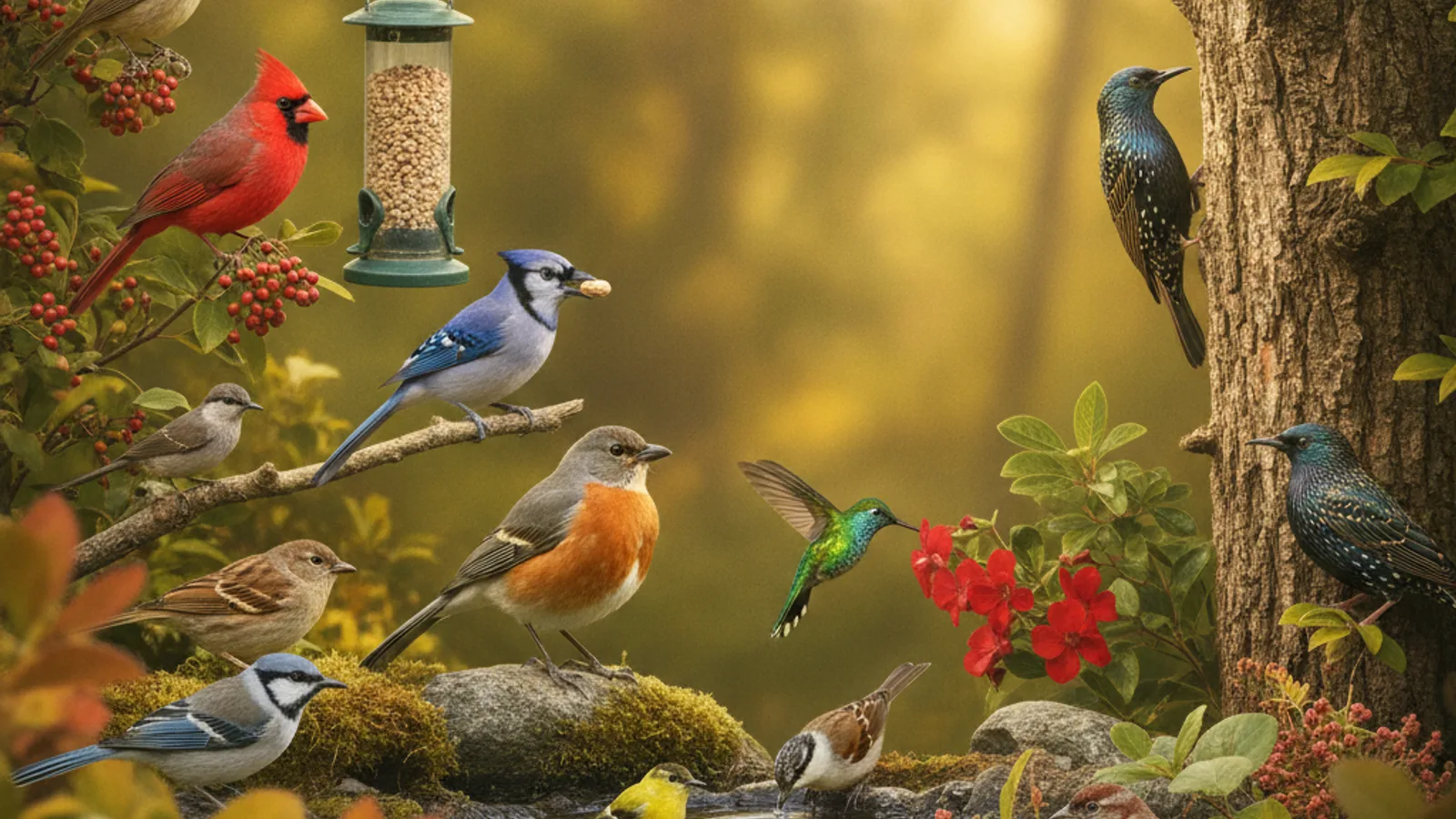
You don't need to travel to a remote wetland or tropical forest to start birding. Some of the most interesting and beautiful birds in North America are right outside your window. Learning these 15 species will give you a solid foundation, and you'll start noticing birds everywhere you go.
The bird that makes non-birders into birders. Males are unmistakable, brilliant red with a pointed crest and black face. Females are warm brown with red tinges. Year-round residents across the eastern US. Their loud, clear "birdy birdy birdy" whistle is one of the first songs you'll learn.
Loud, smart, and impossible to ignore. Blue Jays are stunning birds with complex social behavior, they cache food, mimic hawk calls to scare other birds, and travel in family groups. They're year-round across the eastern US and instantly recognizable by their blue, white, and black plumage.
The quintessential backyard bird. Robins are often the first sign of spring, hopping across lawns hunting for earthworms. Dark gray-brown above with a distinctive warm orange-red breast. Their cheerful "cheerily, cheer-up, cheerily" song is the soundtrack of suburban mornings across the continent.
Tiny, curious, and fearless. Chickadees are often the first birds to discover a new feeder, and they'll sometimes eat right from your hand. Named for their distinctive "chick-a-dee-dee-dee" call. They're acrobatic feeders, hanging upside down from branches to pick insects and seeds.
Soft, gentle, and everywhere. Mourning Doves are one of the most abundant birds in North America, there are an estimated 350 million of them. Their mournful "coo-OO-oo" call gives them their name. Plump, tan birds with a long pointed tail and small head. They're ground feeders and often seen in pairs.
The smallest and most common woodpecker in North America. Black and white striped with a short bill. Males have a small red patch on the back of the head. They'll visit suet feeders regularly and you'll hear their sharp "pik!" call and rapid drumming on trees.
Bright canary-yellow males in summer are showstoppers. They transform into dull olive-brown in winter, a dramatic molt that surprises many beginners. Goldfinches are strict vegetarians and love thistle (nyjer) seed. Their bouncy, undulating flight and "per-CHICK-o-ree" call are distinctive.
Love them or hate them, House Sparrows are everywhere humans are. Originally from Europe, they're now one of the most widespread birds on Earth. Males have a gray cap and black bib; females are plain brown. They're social, noisy, and incredibly adaptable, perfect for learning bird behavior.
The bird that walks headfirst down tree trunks. Nuthatches are compact, bold little birds with blue-gray backs and white faces. They wedge seeds into bark crevices and hammer them open, that's where "nuthatch" (nut-hack) comes from. Their nasal "yank yank" call is easy to learn.
The only breeding hummingbird in eastern North America. Impossibly small (about the weight of a penny), males flash an iridescent ruby throat in the right light. They hover at flowers and feeders, beating their wings 53 times per second. Watching one up close is genuinely magical.
Brown and streaky, the "default sparrow" that teaches you to look carefully. Song Sparrows are found coast to coast and sing constantly from exposed perches. Their song starts with three clear notes then tumbles into a musical trill. Once you learn this species, you'll have a baseline for identifying all other sparrows.
The ultimate singer. Mockingbirds learn and repeat the songs of other birds, a single male can know 200+ songs. Gray with white wing patches that flash in flight. They sing day AND night (especially unmated males in spring, your 3 AM alarm clock). Bold and territorial, they'll dive-bomb cats and even people.
Males are jet black with brilliant red and yellow shoulder patches, they puff them up and sing "conk-la-REE!" from cattails and fence posts. One of the most abundant birds in North America with an estimated 200 million individuals. Females look completely different, streaky brown, often mistaken for sparrows.
The "snowbird." Juncos appear at feeders in fall and winter across most of the US, then head north to breed. Slate-gray with a white belly and flashing white outer tail feathers. They're ground feeders and often travel in flocks. One of the most common winter feeder birds in North America.
Tiny but LOUD. Carolina Wrens have an outsized voice, their "teakettle teakettle teakettle" song carries far. Warm reddish-brown with a bold white eye stripe and an upturned tail. They nest in the weirdest places, mailboxes, boots, hanging plants, garage shelves. Year-round across the eastern US.
Getting Started
You don't need expensive gear to start birding. A pair of entry-level binoculars ($30-50) and a free app like Merlin Bird ID (from Cornell Lab) will get you 90% of the way. Start by sitting quietly near a feeder or in your yard for 15 minutes and just watching. You'll be amazed at what shows up.
The most important skill in birding isn't identification, it's observation. Notice how birds move, what they eat, how they interact. The IDs will come naturally once you start paying attention.