Best Birdhouses and Nest Boxes 2026: The Right Box for Each Species
One measurement decides who nests in your box: the diameter of the entrance hole. Everything else, the wood, the finish, the price, the shape of the roof, matters far less. A hole of the right size invites the species you want and physically excludes the ones you do not. A hole an eighth of an inch too large hands the box to a European Starling before your bluebirds ever see it.
That is why "best birdhouse" is the wrong search. The right question is which box for which bird. This guide gives you the hole-size chart first, then interior dimensions, construction standards, mounting, timing, and monitoring, and it starts by clearing up the single most common mistake in backyard birding.
At a Glance
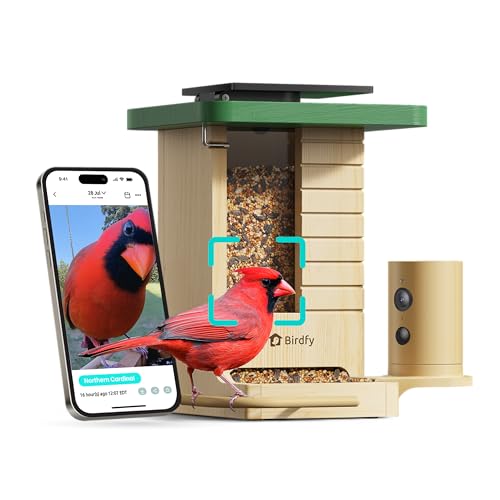 Birdfy Smart Bird Feeder with Camera Solar Powered,...
 The Sibley Guide to Birds, 2nd Edition
 Stokes Select Double Suet Bird Feeder, Two Suet Capacity
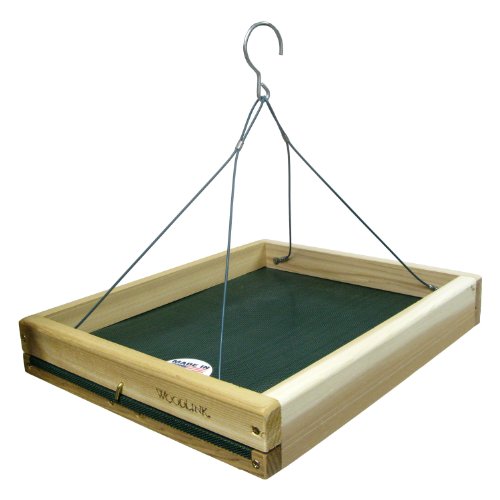 Woodlink 3 in 1 Platform Bird Feeder
Product images and titles from Amazon. As an Amazon Associate we earn from qualifying purchases.
Entrance Hole Size to Species Chart
Print this, or measure twice before you buy. Holes should be clean and round, drilled in the front panel 6 to 7 inches above the floor so nestlings cannot be reached from outside.
| Hole diameter | Species it invites | Notes |
|---|---|---|
| 1 1/8 in | House Wren, Black-capped Chickadee, Carolina Chickadee | Smallest standard size, excludes almost every competitor including House Sparrows |
| 1 1/4 in | Tufted Titmouse, White-breasted Nuthatch, Downy Woodpecker | Also usable by chickadees |
| 1 1/2 in | Eastern Bluebird, Tree Swallow, Violet-green Swallow, Carolina Wren | The critical size: large enough for bluebirds, too small for European Starlings |
| 1 9/16 in | Western Bluebird, Mountain Bluebird | Western species are slightly bulkier, still starling-resistant |
| 1 3/4 to 2 in | Great Crested Flycatcher, Ash-throated Flycatcher | Starlings can enter at this size, so expect competition |
| 2 1/8 in | Purple Martin (colony houses and gourds) | Crescent-shaped openings also used to deter starlings |
| 2 1/2 in | Northern Flicker | Deep box, packed with wood chips the birds excavate |
| 3 in | Eastern Screech-Owl, American Kestrel | Large deep boxes, 2 to 3 inches of wood-chip bedding instead of a bare floor |
| Open front (no hole) | American Robin, Eastern Phoebe, Barn Swallow | Nesting shelves, not enclosed houses |
The Correction Most Guides Get Wrong: Cardinals, Robins, and Orioles Do Not Use Birdhouses
"Best birdhouse for cardinals" is one of the most searched birdhouse phrases in North America, and the honest answer is that no such thing exists. The Northern Cardinal is not a cavity nester. Neither is the American Robin, the Baltimore Oriole, the Ruby-throated Hummingbird, the American Goldfinch, the House Finch (which will occasionally take a ledge, a hanging basket, or an open shelf but not a proper enclosed box), or the Blue Jay. These birds build open cup nests in branches, shrubs, or, in the oriole's case, a woven hanging pouch near the tip of a limb. The hummingbird's is a walnut-sized cup of plant down and spider silk saddled on a thin branch. Putting up an enclosed box for any of them will not work no matter what the packaging says.
Cavity nesting is a specific adaptation. The birds that do it are chickadees, titmice, nuthatches, wrens, bluebirds, swallows, martins, woodpeckers, some flycatchers, screech-owls, and kestrels. That is essentially the list. Every other backyard bird needs habitat, not hardware.
So if cardinals are what you want, here is what actually works:
- Plant dense cover. Cardinals nest 3 to 10 feet up in thick, twiggy shrubs and vines. Viburnum, dogwood, hawthorn, elderberry, grape, and honeysuckle tangles all get used. A hedge left unpruned on the inside beats any manufactured structure.
- Offer nesting material, not a nest. Fine twigs, dry grass, and strips of bark left in a pile or a suet cage give them a head start.
- Feed them where they already are. Black-oil sunflower and safflower at a hopper or platform feeder keeps a pair on your property through the breeding season. See our bird feeder guide for the setup that works.
- Add water. A shallow bath is used by every one of the non-cavity nesters listed above. Our bird bath guide covers depth and placement.
For robins, phoebes, and Barn Swallows, there is a middle option: the open nesting shelf. It is a floor with a back and two partial sides, no roof cavity and no entrance hole, mounted under an eave or porch overhang 8 to 12 feet up. Phoebes in particular take to them readily. A cedar nesting shelf is the right product for anyone who arrived here searching for a cardinal or robin house.
Nest Box Dimensions by Species
Interior floor area and cavity depth matter almost as much as the hole. Too shallow and predators reach the young; too large and heat loss becomes a problem for small broods.
| Species | Floor | Cavity depth | Hole height above floor | Mount height |
|---|---|---|---|---|
| Chickadee | 4 x 4 in | 8 to 10 in | 6 to 8 in | 5 to 15 ft |
| House Wren | 4 x 4 in | 6 to 8 in | 4 to 6 in | 5 to 10 ft |
| Titmouse / Nuthatch | 4 x 4 in | 8 to 10 in | 6 to 8 in | 5 to 15 ft |
| Eastern Bluebird | 5 x 5 in | 8 to 12 in | 6 to 7 in | 4 to 6 ft |
| Tree Swallow | 5 x 5 in | 6 to 8 in | 4 to 6 in | 5 to 8 ft |
| Purple Martin | 6 x 6 in per unit | 6 in | 1 to 2 in | 12 to 18 ft, open ground |
| Northern Flicker | 7 x 7 in | 16 to 18 in | 14 to 16 in | 10 to 20 ft |
| Eastern Screech-Owl | 8 x 8 in | 12 to 15 in | 9 to 12 in | 10 to 20 ft |
What Actually Makes a Good Nest Box
Most of the decorative birdhouses sold in garden centers fail on at least three of the points below. Check each one before buying, and treat anything painted, varnished, or metal-bodied as decoration rather than habitat.
- Untreated natural wood. Cedar, cypress, pine, or exterior-grade plywood at least 3/4 inch thick. Thick wood insulates against heat, which kills more nestlings than cold does. Pressure-treated lumber and plastic are both poor choices.
- Never painted or stained inside. The interior must be bare wood. If you want to finish the outside, use a light-colored water-based product on the exterior surfaces only, and never inside the cavity or around the entrance hole.
- Ventilation holes. Small gaps or drilled holes near the top of each side panel let heat escape. Boxes in full sun without ventilation can exceed lethal temperatures on a summer afternoon.
- Drainage holes. Four holes in the floor, or clipped corners, so a driving rain does not pool around the nest.
- Rough or grooved interior front. Nestlings climb the front wall to fledge. A smooth interior traps them. Good boxes have horizontal saw kerfs or roughened wood below the hole; if yours is smooth, add a strip of hardware cloth or cut shallow grooves yourself.
- A panel that opens. Side-opening is best for monitoring, front-opening is acceptable, top-opening is worst because you look straight down onto the nest. If a box cannot be opened, it cannot be cleaned, and it will not stay usable.
- An extended, sloped roof. Two to three inches of overhang past the entrance keeps rain out of the hole and makes it harder for a raccoon to reach down from above.
- No perch. This one is non-negotiable. Cavity nesters cling to wood and never need a perch. What a perch does provide is a grip for House Sparrows harassing the residents and a foothold for predators. Snap off any dowel your box came with.
Mounting: Pole and Baffle, Not a Tree
Where you put the box determines whether the brood survives. The most common failure is nailing a box to a tree trunk, which is a highway for raccoons, snakes, and squirrels.
- Use a smooth metal pole (electrical conduit or a purpose-made 1/2 inch pole) rather than wood, and never a tree. Wood posts can be climbed; smooth metal cannot.
- Add a baffle. A stovepipe or cone baffle mounted directly beneath the box, with its top at least 4 feet off the ground, stops nearly all mammalian predation. This is the same hardware that protects feeders, and the sizing logic is identical, see our feeder guide section on baffles and pole placement.
- Height by species. Bluebirds and swallows low (4 to 6 feet), chickadees and titmice mid (5 to 15 feet), owls and flickers high (10 to 20 feet), martins highest and in the open (12 to 18 feet with clear flight lanes).
- Face away from prevailing wind and afternoon sun. In most of North America that means an entrance pointing north or east. Angle the box a few degrees forward so rain runs off the front rather than in.
- Spacing. Bluebirds are territorial: 100 yards or more between bluebird boxes. Tree Swallows tolerate close neighbors, so a paired box 10 to 20 feet from a bluebird box lets a swallow pair take one while the bluebirds keep the other, and the two species coexist. Wrens need far less space and will fill several boxes in a small yard.
- Habitat match. Bluebirds and swallows want open lawn, pasture, or field edge. Chickadees, titmice, and nuthatches want woodland edge with cover nearby. Purple Martins want wide open ground within reach of water, and will refuse a house tucked near tall trees.
Timing: Up in Late Winter, Cleaned Out in Late Fall
Put boxes up in late winter, roughly February across most of the United States and earlier in the South. Birds prospect for cavities well before they build, and a box that has had a few weeks to weather looks less conspicuous than one installed the morning nesting starts. A late-installed box is not wasted, second broods and even winter roosting flocks use them, but the first-brood window is the one you want.
Clean boxes out in late fall, after all nesting activity ends. Open the panel, remove the old nest material, scrape the interior, and rinse with a weak bleach solution (one part bleach to nine parts water) if the box held a failed nest or visible parasites. Let it dry fully with the panel open, then close it up. Old nests hold mites and encourage mice to move in over winter. Leaving the box mounted through winter is fine and often useful, chickadees and bluebirds will pack into a dry box on a cold night.
A rough seasonal rhythm for a monitored box:
- February: boxes mounted, baffles checked, hardware tightened.
- March to July: weekly checks, records kept, House Sparrow nests removed.
- Mid-season: after a brood fledges, clear the old nest so the pair can start a second one.
- October or November: final cleanout and inspection for rot or chewed openings.
Monitoring and the Law
Checking nest boxes is legal, valuable, and the basis of long-running citizen science programs. Under the Migratory Bird Treaty Act you may not collect, keep, or destroy the nests, eggs, or young of native birds, but brief, careful monitoring visits are not a violation and are actively encouraged by nest box programs. Keep it sane:
- Check once a week at most, in mid-morning to early afternoon, in fair weather.
- Keep each visit to under a minute, and tap the box before opening so the adult can leave calmly.
- Stop opening the box once nestlings are about 12 to 13 days old. Older chicks can "explode" out of the box prematurely and will not survive it.
- Do not linger, and do not bring a crowd. Repeated human trails to a box can attract predators.
Two species are exceptions. The House Sparrow and the European Starling are non-native and are not protected by federal law in the United States. Both are aggressive cavity competitors, and House Sparrows in particular will kill adult bluebirds and chickadees inside a box. Their nests may legally be removed, and a monitored box program depends on doing so consistently. Learn to recognize them before you touch anything, our common backyard birds guide shows both alongside the natives they are mistaken for, and the free photo ID tool and song ID tool will settle a question in seconds if you are unsure.
If a native species you did not intend takes the box, leave it. A House Wren in a chickadee box is still a native bird raising native young.
Camera Nest Boxes
Camera boxes are the fastest-growing category in this space, and for good reason: they let you watch the whole nesting cycle without opening anything. A camera box is a standard nest box with a small infrared camera in the roof, wired or wifi, streaming to a phone app.
What to look for, and what to be skeptical about:
- Infrared, not white light. The interior camera must use IR illumination. Visible light in a nest cavity is disruptive.
- Correct box dimensions anyway. Plenty of camera boxes are built to the camera's requirements rather than the bird's. Check hole diameter and floor size against the chart above before buying.
- Cleanout access with the camera installed. Some designs make the annual cleanout awkward or require unwiring the camera.
- Power and signal. Nest boxes belong on poles in the open, which is often the far corner of a yard. Confirm wifi range, and prefer solar or a long outdoor-rated cable over a battery you have to swap mid-season.
- Subscription terms. Some smart bird products gate recorded footage behind a monthly plan. Check before you buy, our guide to AI bird feeders with no subscription covers which brands charge and which do not.
Browse the current field of wifi nest boxes with cameras and bluebird houses with cameras. If your real goal is watching birds up close rather than watching a nest specifically, a camera feeder is easier to site and works year-round, the Birdfy Smart Bird Feeder with Camera, Solar Powered is the common starting point.
The Rest of the Kit
- Stovepipe or cone baffle, the single highest-value accessory. A box without one is a raccoon feeder.
- Smooth metal mounting pole, conduit plus a ground stake beats a wooden post in every way that matters.
- Metal hole guard, prevents squirrels and woodpeckers from enlarging the entrance.
- Dried or live mealworms, the one supplemental food that genuinely helps a bluebird pair feeding nestlings.
- The Sibley Guide to Birds, 2nd Edition, for settling identification of the adults coming and going, including sparrow and starling look-alikes.
- Stokes Select Double Suet Bird Feeder, Two Suet Capacity, keeps Downy Woodpeckers, chickadees and White-breasted Nuthatches on the property year-round, which raises the odds they scout your boxes in spring.
- Woodlink 3 in 1 Platform Bird Feeder, the practical way to feed the non-cavity nesters (cardinals, jays, doves) that your boxes will never serve.
Frequently Asked Questions
What size hole should a birdhouse have?
It depends entirely on the species you want. 1 1/8 inch suits House Wrens and chickadees, 1 1/4 inch suits titmice, nuthatches and Downy Woodpeckers, 1 1/2 inch suits Eastern Bluebirds, Tree Swallows and Carolina Wrens while still excluding European Starlings, 1 9/16 inch suits Western and Mountain Bluebirds, 1 3/4 to 2 inch suits Great Crested Flycatchers, 2 1/2 inch suits Northern Flickers, and 3 inch suits Eastern Screech-Owls and American Kestrels. Never enlarge a hole. A bigger opening lets larger competitors and predators in, and you cannot make it smaller again without a metal guard.
What is the best birdhouse for bluebirds?
An untreated wood box with a 1 1/2 inch round hole (1 9/16 inch for Western and Mountain Bluebirds), a 5 by 5 inch floor, the hole 6 to 7 inches above the floor, no perch, ventilation and drainage holes, a rough interior front, and a side panel that opens for cleaning. Mount it 4 to 6 feet up on a smooth metal pole with a baffle, in open lawn or field, facing away from prevailing wind. Brand matters much less than those numbers.
What is the best birdhouse for cardinals?
There is not one. Northern Cardinals are not cavity nesters and will never use an enclosed birdhouse, whatever the hole size. They build open cup nests in dense shrubs and vines 3 to 10 feet up. To host them, plant thick shrubbery (viburnum, dogwood, hawthorn, a brushy unpruned hedge) and keep a sunflower or safflower feeder running. A nesting shelf is the closest structural equivalent, and it will more likely be taken by a robin or a phoebe than a cardinal.
When should I put up a birdhouse?
Late winter, roughly February in most of the United States and earlier in the South, so the box is weathered and in place before birds prospect in early spring. Boxes put up later still get used for second broods and as winter roosts, so a mid-season installation is not wasted. Clean boxes out in late fall once nesting has ended.
Should a birdhouse have a perch?
No. Cavity nesters cling to wood and do not need one. A perch mainly gives House Sparrows a platform to harass the residents from and gives predators something to grip while reaching inside. If your box came with a dowel perch, snap it off and fill the hole. This alone improves the odds for a Black-capped Chickadee or bluebird pair.
Is it legal to look inside an active nest box?
Yes. Brief monitoring of native nests is legal and is how organized nest box programs collect their data, provided visits are short, spaced about a week apart, and stopped once nestlings are 12 to 13 days old. You may not collect or destroy native nests, eggs, or young. House Sparrows and European Starlings are non-native and unprotected in the United States, so their nests may legally be removed, which is standard practice for anyone running a bluebird trail.