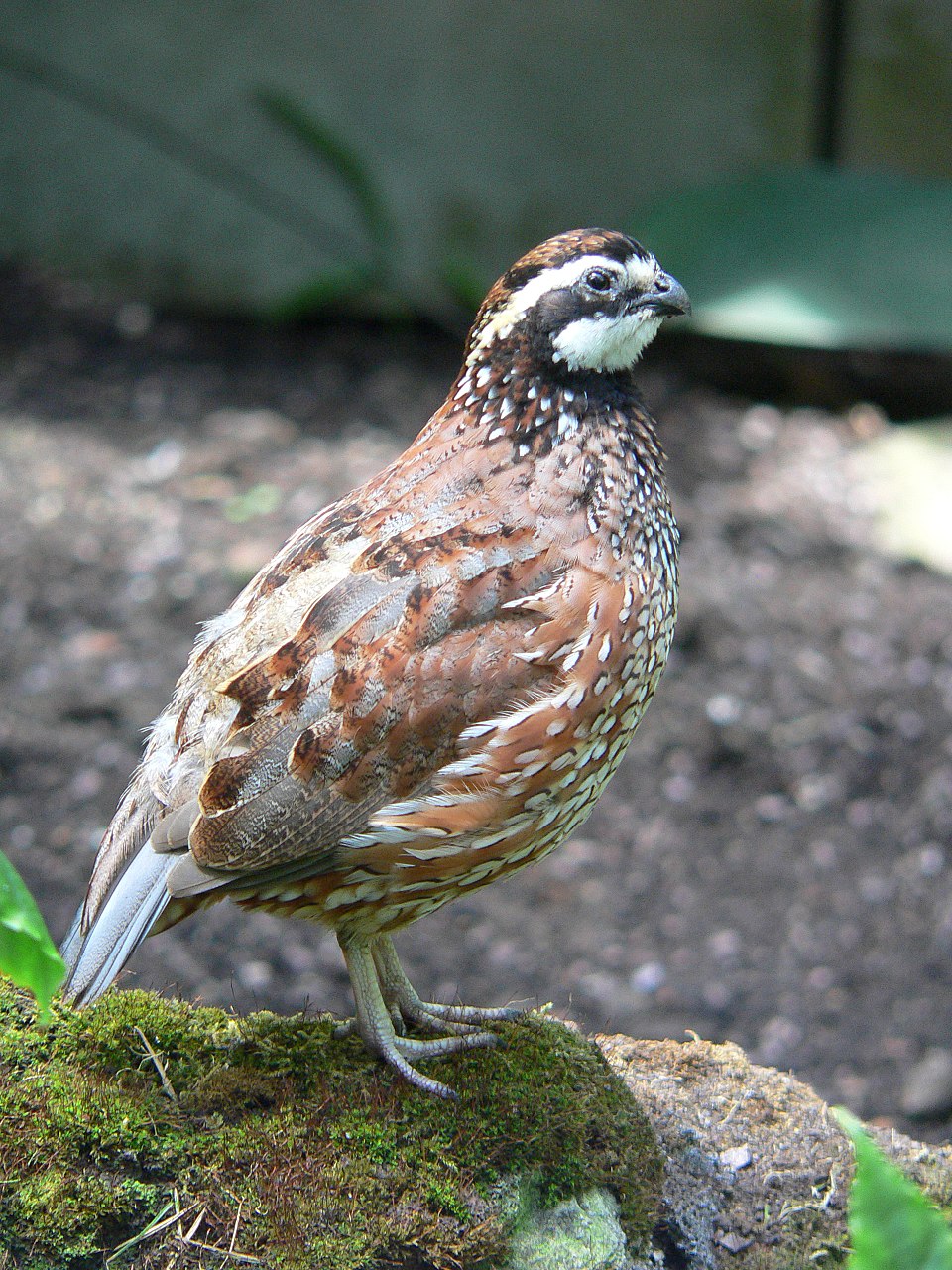
Few sounds say "American countryside" quite like the clear, rising whistle of a male Northern Bobwhite calling his own name from a fencepost on a warm spring morning. This plump, chicken-like quail is the only native quail across most of the eastern and central United States, a bird so woven into rural culture that its bob-WHITE! whistle is instantly recognizable even to people who have never knowingly seen one. Roughly the size of a chunky robin but built like a tiny grouse, it spends most of its life on the ground in brushy fields, hedgerows, pine savannas, and the weedy margins where farmland meets cover.
The Northern Bobwhite is also a bird in trouble. Once abundant across a huge swath of the country, its numbers have fallen sharply over the past half-century as clean farming, fire suppression, and the loss of weedy "messy" habitat have erased the patchy ground cover it depends on. In many areas where grandparents remember hearing bobwhites every summer, the whistle has gone quiet. That decline has made it a flagship species for grassland and early-successional habitat conservation, and a bird that backyard landowners with acreage can genuinely help.
Look for a small, rotund, short-tailed ground bird with an intricately patterned brown body and a strongly marked head. Bobwhites are usually seen scurrying for cover or exploding into a low, fast, whirring flight when flushed, then dropping back down a short distance away. Their compact, round-bodied silhouette and habit of staying low in grass and brush separate them from most other birds you'll encounter in open country.
| Size & shape | Small, plump, round-bodied quail with a short gray tail and a slight crest; smaller and dumpier than a partridge |
| Head pattern | Bold facial striping, a pale stripe over the eye and a second through the cheek, framing a dark line |
| Throat (male) | Bright white throat and eyebrow stripe sharply bordered by a black band |
| Throat (female) | Buffy or tan throat and eyebrow stripe in place of the male's white |
| Body plumage | Warm reddish-brown above, scaled and streaked below with black, white, and chestnut markings |
| Flight | Sudden, noisy, low burst of stiff wingbeats over a short distance before diving back into cover |
Male vs. female
The sexes are similar in size and body pattern but differ clearly in the face. The male shows a crisp white throat and white eyebrow stripe, each neatly outlined by a black band that wraps across the face, giving him a bold, high-contrast look. The female wears the same head pattern but in warm buff or tan instead of white, with the dark border much reduced or muted. Once you learn this, a quick look at the face tells you the bird's sex even at a distance.
Juveniles
Newly hatched chicks are tiny, mobile, downy balls of buff and brown that leave the nest within hours of hatching and feed themselves under the hen's guidance. Juveniles grow quickly and within a few weeks resemble small, dull adults with a duskier, less defined head pattern. Young males begin showing hints of the white throat as they molt into their first winter plumage, and by their first spring most birds are difficult to distinguish from full adults.
The signature sound is the male's loud, clear, rising whistle that gives the bird its name: a two- or three-part bob-WHITE or bob-bob-WHITE, with the final note sliding sharply upward. Males whistle from exposed perches like fenceposts, low branches, and brush piles, mostly through the spring and summer breeding season, and the sound carries impressively across open fields.
Beyond the famous whistle, bobwhites use a rich set of contact and assembly calls. The most important is the koi-lee or "covey call", a soft, gathering whistle given at dusk and dawn to reassemble a scattered group. Birds also make low clucks, hisses, and sharp alarm notes, and a flushed covey erupts with a startling whir of wings rather than any vocal sound.
The Northern Bobwhite is a year-round resident across the eastern and south-central United States, from the Great Plains east to the Atlantic and south through Texas into Mexico, with isolated and reintroduced populations elsewhere. It is essentially non-migratory, birds live out their lives within a small home range, often less than a square mile, and a covey may use the same few acres of cover for an entire season.
Rather than moving with the seasons, bobwhites shift behavior: family groups merge into winter coveys for safety and warmth, then break apart as males begin whistling and pairing in spring. The species is strongest in the South and parts of Texas, while populations across the Midwest, Northeast, and northern edges of its range have thinned dramatically or vanished entirely as suitable habitat disappeared.
Bobwhites are ground foragers with a broadly seed-based diet. For most of the year they feed heavily on the seeds of weeds, grasses, and legumes, ragweed, partridge pea, lespedeza, beggarweed, and similar "weedy" plants are staples, along with waste grain in farmed areas and a variety of berries and mast such as acorns and pine seeds. They scratch and peck through leaf litter and bare ground, which is one reason patchy, open cover matters so much to them.
In the warmer months the diet shifts toward insects, and this is especially critical for chicks: newly hatched bobwhites need protein-rich insects like grasshoppers, beetles, and bugs to grow, and broods depend on bug-friendly, weedy habitat where insects are abundant and the young can move through it easily. Adults take insects too, making the species both a seed-eater and an opportunistic insectivore depending on the season.
Northern Bobwhites nest on the ground, where both members of a pair help build a shallow scrape lined with grasses and often arched over with a woven canopy of dead vegetation that hides the eggs from above. Nests are tucked into grassy or weedy cover near edges, and a clutch is unusually large, frequently a dozen or more eggs, sometimes pushing toward two dozen.
Incubation lasts a little over three weeks, and remarkably either the male or the female may take on incubation, with males sometimes raising a brood entirely on their own while the female starts a second nest. The chicks are precocial, leaving the nest almost immediately and feeding themselves while a parent leads and protects them. This flexible, double-clutching strategy lets bobwhites produce a lot of young in a good year, an adaptation to a short, dangerous life close to the ground.
The Northern Bobwhite is not a typical feeder bird, and you will rarely coax one onto a hanging tube or platform in a tidy suburban yard. It is a habitat bird, if you have acreage or a rural property within its range, you attract bobwhites by managing land, not by stocking a feeder. The good news is that the same "messy" habitat that helps bobwhites also benefits a host of declining grassland species.
- Leave weedy, brushy edges unmowed, ragweed, partridge pea, and native grasses provide both seeds and the bare-ground structure quail need to move and feed.
- Maintain a patchwork of cover: open feeding areas, dense escape cover like brush piles or shrub thickets, and grassy nesting cover all within a short walk of each other.
- Avoid clean, wall-to-wall mowing or spraying; disturbance like occasional disking or prescribed fire resets vegetation to the early, weedy stage bobwhites favor.
- Plant or encourage native warm-season grasses and legumes rather than dense exotic sod grasses, which are too thick for chicks to travel through.
- If you must offer food, a scattered grain feeder or food plot near heavy cover is far more effective than an elevated feeder, but habitat always matters more than handouts.
- Skip insecticides on field edges, insect-rich cover is essential for chicks, which depend on bugs for protein in their first weeks.
- California Quail: A western quail with a forward-curving black topknot plume and scaly belly; ranges don't normally overlap with the bobwhite's eastern strongholds.
- Gambel's Quail: A desert Southwest quail with a teardrop head plume and, in males, a black belly patch; found in arid country well west of typical bobwhite range.
- Scaled Quail: A pale, gray, scaly quail of the arid Southwest with a whitish 'cotton-top' crest; lacks the bobwhite's bold brown head striping.
- Ruffed Grouse: Much larger, with a fan-shaped tail and a forest habitat; explodes from cover like a bobwhite but is a woodland bird, not a field-edge quail.
What does a Northern Bobwhite sound like?
The famous call is a loud, clear, rising whistle that sounds like the bird is saying its own name: 'bob-WHITE!' with the last note sliding upward. Males whistle this from perches in spring and summer. Coveys also use a soft 'koi-lee' gathering call at dawn and dusk to regroup.
Why are Northern Bobwhites disappearing?
Their numbers have fallen sharply over the past several decades, mainly due to habitat loss. Clean, intensive farming, fire suppression, and the removal of weedy field edges and brushy cover have erased the patchy, early-successional habitat bobwhites need to feed, nest, and hide. They are now considered a near-threatened, declining species.
How can I attract bobwhites to my property?
They are habitat birds, not feeder birds. If you own land in their range, the best approach is to maintain weedy edges, native warm-season grasses, brushy escape cover, and small open feeding areas all close together. Occasional disking or prescribed fire keeps vegetation young and weedy. A scattered grain food plot near heavy cover helps, but habitat matters far more than feeders.
What's the difference between a male and female bobwhite?
Both sexes share the same body pattern and bold head striping, but the male has a bright white throat and eyebrow stripe outlined in black, while the female shows the same pattern in warm buff or tan. A quick look at the face is the easiest way to tell them apart.
Do Northern Bobwhites migrate?
No. They are year-round residents that stay within a small home range for life, often less than a square mile. Instead of migrating, they change social behavior with the seasons, gathering into protective winter coveys, then pairing up and dispersing when males begin whistling in spring.