Best Spotting Scopes 2026: Picks by Use Case
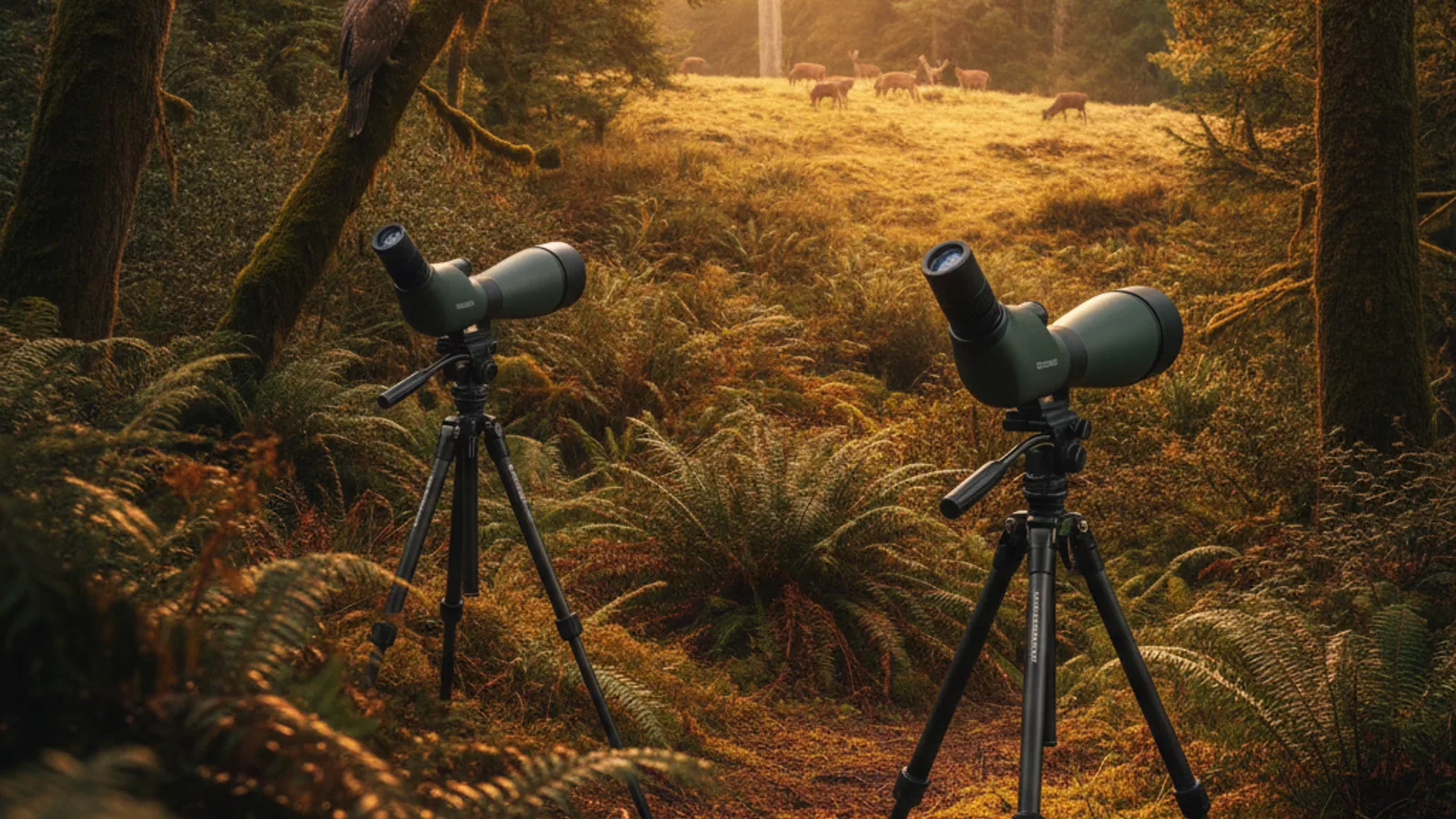
A spotting scope is the upgrade from binoculars when you’re serious about distance. Where 8x42 binoculars top out around 50-100 yards for serious detail, a spotting scope at 30x or 60x lets you ID a sandpiper across a mudflat, a hawk’s eye-color from 200 yards, or watch nest behavior from far enough that you’re not disturbing it.
The catch: scopes range from $200 (entry) to $4000+ (Swarovski/Zeiss). Most birders never need the top tier, the $700-1500 range hits the sweet spot for image quality vs price. This guide is organized by use case and budget.
At a Glance
 Celestron – Regal M2 65ED Spotting Scope – ED Glass...
 Vortex Optics Razor HD Spotting Scopes
 Celestron NexStar 5SE Computerized Telescope – 5-Inch...
 Maven CS.1 Spotting Scope – 15-45x65mm Spotter with ED...
 Kowa TSN-883 Prominar Pure Fluorite Spotting Scope...
 Manfrotto MKBFRA4-BH Compact Lightweight Tripod for...
Product images and titles from Amazon. As an Amazon Associate we earn from qualifying purchases.
Quick Picks by Budget
| Tier | Best Pick | Best For | Price |
|---|---|---|---|
| Entry ($200-400) | Celestron Regal M2 65ED | First scope, casual birding | $300-400 |
| Mid ($500-900) | Athlon Ares G2 UHD 20-60x85 | Most birders, value sweet spot | $700-900 |
| Pro ($1000-2000) | Vortex Razor HD 27-60x85 | Serious birders, hunters | $1500-1800 |
| Premium ($2500-4500) | Swarovski ATX 95 Modular | Top-tier optics, last-scope-you-buy | $3500-4500 |
| Astronomy crossover | Celestron NexStar 5SE | Birders who also star-gaze | $700-900 |
| Compact / travel | Kowa TSN-554 Prominar | Backpacking, travel birding | $1500-1800 |
| Digiscoping | Swarovski ATX 30-70x115 | Phone or camera through scope | $5000+ |
Entry Tier ($200-400)
Celestron Regal M2 65ED
The best $300-400 scope on the market. ED (extra-low dispersion) glass at this price is unusual, you get noticeably less chromatic aberration than other entry scopes. 16-48x zoom eyepiece included.
Pros
- ED glass at sub-$400
- Magnesium body, IPX6 waterproof
- Includes case + zoom eyepiece
Cons
- 65mm objective limits low-light performance
- 16-48x zoom range is shorter than 20-60x competitors
Vortex Diamondback HD 20-60x85
Entry-tier Vortex with the lifetime VIP warranty. 85mm objective gives noticeably better low-light performance than 65mm scopes at the same price. Image isn’t quite as sharp as the Celestron Regal but build quality is excellent.
Check current price →Mid Tier ($500-900), The Sweet Spot
Athlon Ares G2 UHD 20-60x85
Best mid-tier scope on the market for the past two years. ED glass + dielectric prism coatings produce image quality that rivals scopes 2x the price. 85mm objective for serious low-light reach. Athlon’s lifetime warranty is no-questions-asked.
Most birders we know who’ve owned this scope for 3+ years say they could happily use it the rest of their life. That’s the highest possible compliment for a scope.
Check current price →Vortex Viper HD 20-60x85
Vortex’s mid-tier scope. Slightly behind the Athlon Ares G2 UHD on optical performance but ahead on accessories, the included Vortex case is much better. Lifetime VIP warranty.
Check current price →Pro Tier ($1000-2000)
Vortex Razor HD 27-60x85
Where you start to feel the European-glass tier. APO (apochromatic) ED glass produces zero visible color fringing on high-contrast subjects (white bird against dark water). 27-60x zoom range is birder-optimized.
This is the scope serious birders buy if they don’t want to spend Swarovski money. 5+ year owners say it’s indistinguishable from $3K scopes in field use.
Check current price →Maven CS.1 15-45x65
Compact scope that hunters love, 65mm objective is lighter for backcountry use, image quality is exceptional. Maven sells direct, no middlemen, lifetime warranty.
Check current price →Premium Tier ($2500-4500)
Swarovski ATX 95 Modular
The reference scope. The 95mm objective + Swarovski HD glass + zoom eyepiece is the closest thing to "perfect" optics for most birders. Modular design lets you swap eyepieces and even objective bodies (65/85/95mm) without buying a new scope.
Caveats: ~$4500 with a zoom eyepiece, weighs 4.6 lbs (the 65mm version is 3 lbs), and ships from Austria with limited Amazon stock. Worth it if optics are your main hobby.
Check current price →Kowa TSN-883 Prominar 88mm
Kowa’s flagship. Fluorite crystal element produces image quality that some birders prefer to Swarovski. Less brand cachet but optically peer-level. Fixed eyepieces are sold separately ($300-700) which lets you customize.
Check current price →Astronomy Crossover
Spotting scopes top out around 60-70x magnification. For serious astronomy, you want a telescope, but several telescopes work well for terrestrial daytime use too:
Celestron NexStar 5SE
5-inch (127mm) computerized telescope. GoTo system finds 40,000+ celestial objects automatically. With an erecting prism (sold separately), you can use it for terrestrial viewing during the day, perfect for backyard birders who want both worlds.
Check current price →Compact / Travel Scopes
Kowa TSN-554 Prominar 55mm
The travel scope to beat. 55mm objective + premium fluorite crystal in a 4-inch package that weighs 2 lbs. For backpacking birders who refuse to leave optics behind, this is the answer.
Check current price →Tripods (You’ll Need One)
A scope without a tripod is unusable, the magnification multiplies any hand shake. Budget at least $150-300 for a tripod:
- Manfrotto Befree Aluminum, $150, travel-friendly, supports up to 9 lbs.
- Gitzo Traveler Carbon Fiber, $700+, ultralight (2 lb), best-in-class stability.
- Manfrotto Befree Fluid Video Head, smooth panning is critical for tracking flying birds.
- Outdoorsmans Pan-Tilt Head, favorite of hunters and digiscopers.
Digiscoping (Phone or Camera)
Digiscoping = mounting your phone or camera to a spotting scope to take long-distance photos/video. The setup gear:
- Phone Skope universal adapter, the standard. Works with most spotting scopes + phones.
- Novagrade Digiscoping Adapter, for DSLR/mirrorless cameras through scopes.
- Best phone for digiscoping: any modern iPhone or Pixel works. Sensor size matters more than megapixels.
How to Choose
Five questions to answer before buying:
- What’s the farthest you’ll routinely look? Under 100 yards = binoculars are enough. 100-300 yards = entry/mid scope. 300+ yards or shorebird ID = pro/premium.
- How often will you carry it? Day-trip from car: 85mm scope is fine. Backpacking: 55-65mm.
- Will you digiscope? If yes, buy a scope with a fixed objective (no zoom eyepiece) for sharper images, and budget for an adapter.
- What’s the lighting? Larger objective = better low-light. 65mm fine for daytime. 85-95mm noticeably better at dawn/dusk.
- Straight or angled? Angled (eyepiece at 45°) is more comfortable for shared viewing and high-angle subjects. Straight is faster to point at moving targets like flying birds.
Frequently Asked Questions
Are spotting scopes worth it over binoculars?
For specific use cases: yes. If you regularly identify shorebirds at distance, watch nest behavior, or do hawk-watch counts, a scope is essential. For casual backyard birding or migration watching at moderate distances, good binoculars (8x42) are enough.
What magnification do I really need?
Most birders use 30-40x more than 50-60x. Higher magnification amplifies heat shimmer and tripod vibration, often making the image worse. The "20-60x" zoom range on most scopes is somewhat misleading, 60x is rarely usable in real conditions.
Is a $1500 Vortex Razor really better than a $700 Athlon Ares G2?
Yes, but the difference is subtle. Razor has slightly better edge sharpness, less color fringing, and brighter image at dawn/dusk. For 90% of field use, the Athlon is indistinguishable. The Razor matters more if you spend many hours behind the scope (eye fatigue is lower with better glass).
Can I use a spotting scope for stargazing?
Yes, for the moon, planets, and brighter deep-sky objects (Pleiades, Andromeda). Spotting scopes use prisms that give you a correctly-oriented image (right-side-up, not flipped) which is great for terrestrial use but slightly less light-efficient than astronomical telescopes. Don’t expect Hubble views.
How long do scopes last?
Decades, with care. Premium glass (Swarovski/Zeiss/Leica) is essentially a lifetime purchase. Even mid-tier scopes (Vortex Razor, Athlon Ares) last 15+ years if you don’t drop them. The optics don’t degrade; only the rubber armor wears.